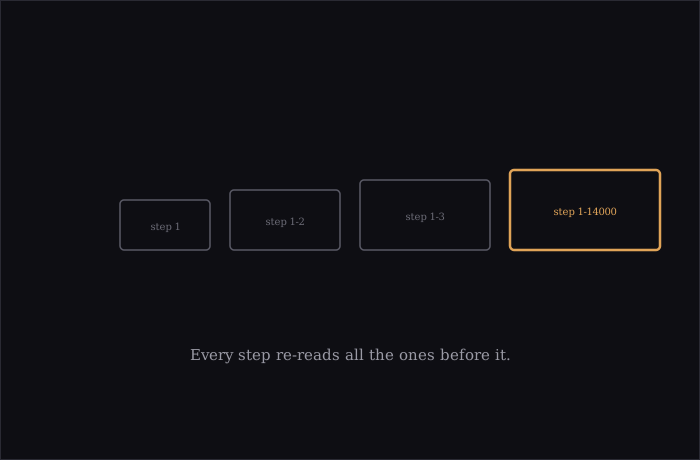
Token and prompt compression tools have been showing up in GitHub’s trending lists all month, usually pitched as a fix for the context cost problem I wrote about separately — an agentic session re-sending its accumulated context at every single step, with cost scaling accordingly. Worth actually explaining what these tools do, and being honest about the limits.
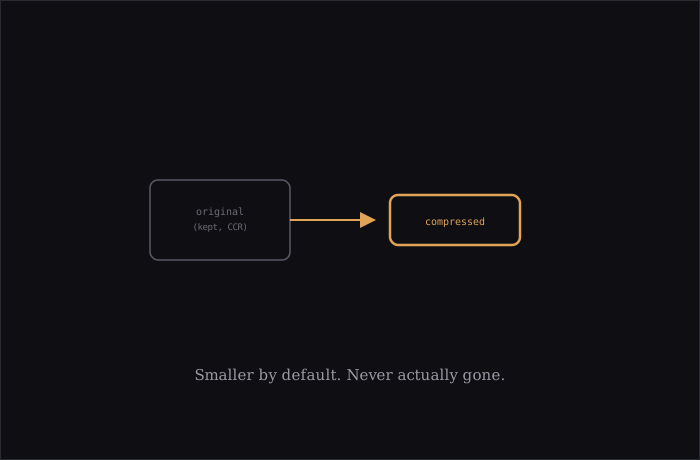
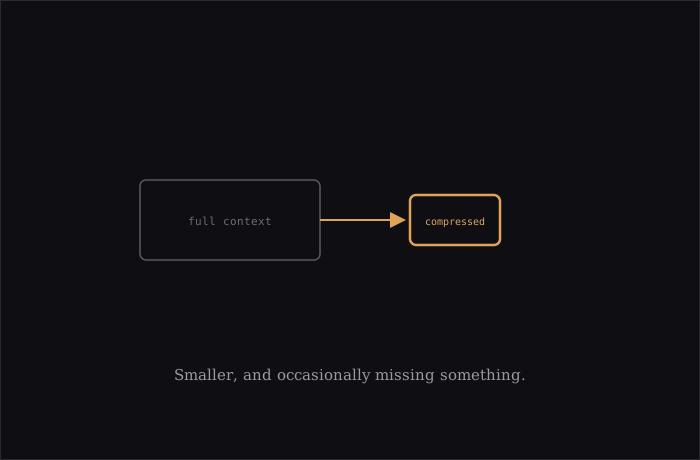
The basic idea: instead of sending an agent’s full accumulated context — every file read, every tool result, the whole conversation so far — on every single call, a compression layer sits in between and shrinks it first. That can mean summarizing older turns that are no longer directly relevant but still needed for general continuity, stripping formatting and boilerplate that don’t carry meaning, deduplicating information that’s been repeated across multiple tool calls, or dropping detail from parts of the context a relevance check decided matter less right now.
Where this genuinely helps: a long-running agentic session accumulates a lot of context that’s necessary for continuity but not necessary in full detail at every step — you don’t need the exact verbatim contents of a file you read forty steps ago, just the takeaway that’s still relevant now. Compressing that down before resending it can meaningfully cut the token volume driving the cost gap I measured in the Claude Code energy post, without the agent losing the thread of what it’s actually doing.
Where it’s genuinely a tradeoff, not a free win: compression is inherently lossy by definition — something gets thrown away or summarized down from its original form, and the whole risk is that the thing discarded turns out to matter later. A summary of a file you read is not the file; if a later step needs an exact detail that got smoothed over in the summary, the agent is now working from an approximation instead of the source, which can quietly introduce mistakes that are hard to trace back to their actual cause. It’s the same fundamental tension I flagged with claude-mem’s session compression — anything summarizing context is making a bet about what’s safe to compress, and that bet is occasionally wrong in ways you don’t notice until something breaks downstream.
The other honest caveat: compression itself isn’t free. Deciding what to keep and what to cut takes its own processing, whether that’s a smaller dedicated model doing the summarizing or a rule-based system scanning for redundancy — real compute spent to save token cost elsewhere. Done well, that trade is clearly worth it on a long session. Done poorly, or applied to a session that wasn’t long enough to have much redundant context in the first place, it’s just added overhead on top of the original cost rather than a genuine reduction.
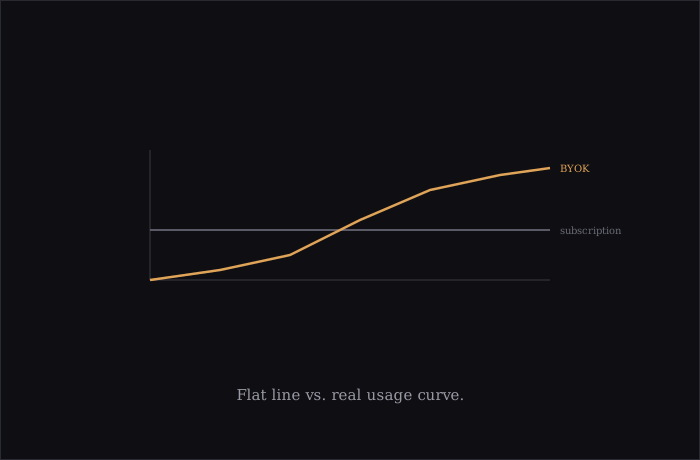
The practical read: token compression is a real, useful lever for exactly the problem it targets — long sessions carrying a lot of context — not a fix for agentic cost in general. It works alongside things like prompt caching and choosing BYOK models deliberately by task rather than replacing either. None of these individually solves the underlying fact that longer sessions cost more; they’re all just different ways of managing how much that scaling actually bites.