I covered ECC early on as a genuinely useful config layer for coding agents. I did not expect to be writing a follow-up about it landing in the top 16 repositories on all of GitHub — not top 16 among AI tools, top 16 period, ahead of projects that have had a decade’s head start.
The trajectory is worth laying out because it’s unusually well-documented at every checkpoint: it crossed 100k stars around June, 163k by later that same month, and creator Affaan Mustafa’s own bio now cites 262k+ stars and roughly 10,000 weekly downloads. Independent tracking puts it at 262.5k stars, 39.3k forks, 367 contributors, global rank #16. For a project that started as a personal configuration pack from an Anthropic hackathon win in September 2025, that’s an extraordinary climb in almost exactly a year.
What ECC actually does hasn’t changed in kind since I first covered it, just in scale: a portable, version-controlled layer of skills, rules, hooks, memory persistence, and security scanning that sits on top of Claude Code, Cursor, Codex, and OpenCode, so the configuration work you do once carries across all of them instead of resetting per project. The numbers behind that have grown right along with the star count — the creator’s current count is 67 agents and 279 skills, shipping weekly across seven different harnesses, up from roughly 48 agents and 183 skills reported back in April.
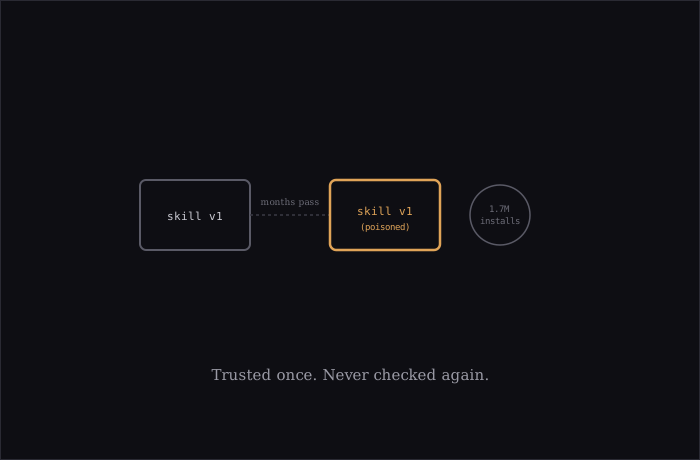
The project has also grown a security angle worth flagging on its own: AgentShield, a scanner that checks agent configurations, MCP servers, and tool permissions for vulnerabilities, distributed as a CLI, a GitHub Action, an ECC plugin, and a GitHub App. Given everything I’ve covered this month about supply-chain risk in the skill and MCP ecosystem, a project at this scale building its own dedicated scanner rather than assuming every dependency is trustworthy is a genuinely sensible response to exactly the problem that ecosystem has been running into.
There’s also a monetization layer now that wasn’t part of the original picture: a hosted GitHub App with private-repo support starting at $19/month, a GitHub Sponsors page, and — through the creator’s separate venture, Itô Markets — a compute-trading desk that ECC agents can apparently transact against directly from inside the harness. None of that changes what the free, open-source core does, but it’s worth knowing the project has grown well past “hobby maintained on nights and weekends” into something with real commercial infrastructure behind it.
I don’t have a tidy explanation for why this specific project outgrew hundreds of similar harness and skills projects to land at #16 globally, and I’d be skeptical of anyone claiming they do with confidence. What I’d point to instead: it solved a real, common annoyance — configuration that doesn’t carry over between tools or projects — early, kept shipping weekly rather than stalling after the initial hackathon buzz, and expanded its scope (skills, then security, then compute) roughly in step with what its own users were actually running into next.