Cloudflare shipped its own official Agent Skill this week — a security-audit skill, gaining stars fast enough to land near the top of GitHub’s daily trending list. After the skill supply-chain story I covered a few days ago, it’s worth being precise about what actually changes when the publisher is a company like Cloudflare instead of an anonymous account on a public marketplace.
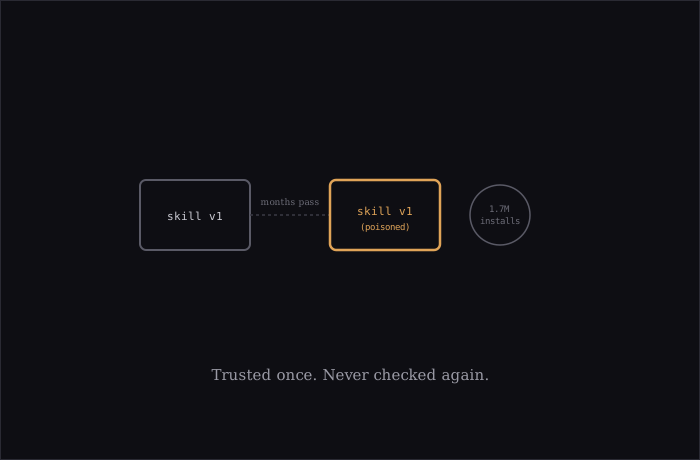
The trust problem I described in that post was specifically about provenance: a skill is a folder of instructions and scripts an agent loads because it matched the task, and most marketplaces check what a skill claims to do at install time, not who’s actually behind it or what it does after that first install. The confirmed attack in that post — cloning a trusted skill, letting it earn real downloads, poisoning it later — worked precisely because nothing tied the skill’s continued behavior back to an accountable, identifiable source.
A skill published directly by Cloudflare changes that specific piece. It’s not sitting in a general marketplace waiting to be cloned and re-uploaded under a similar name — it comes from a verified organization account with an actual reputation on the line, the same reason you’d trust a security patch more when it comes from the vendor’s own official channel than from a third-party mirror. That’s a real, meaningful difference in provenance, not a cosmetic one.
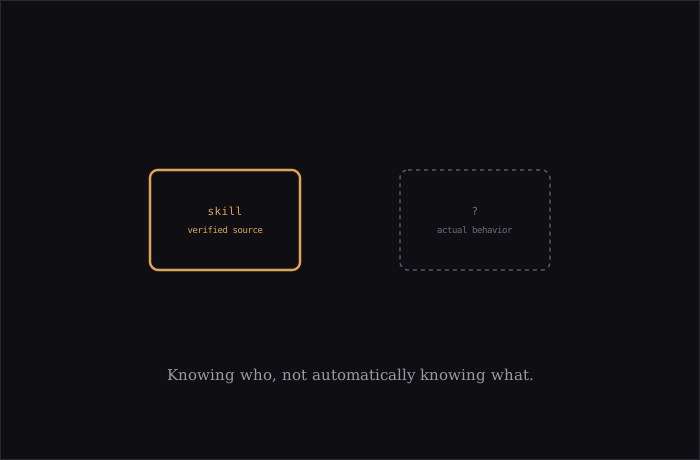
What it doesn’t automatically fix: an official source is more trustworthy about who published it, not automatically safer about what it actually does once installed. A skill from a major vendor still executes real actions inside whatever session it’s loaded into, and “Cloudflare published this” answers the identity question without answering the separate question of exactly what permissions it’s exercising, whether at some point control of that account could be compromised, or whether a security-audit tool specifically — one whose entire job is inspecting configurations for vulnerabilities — might itself become an especially attractive target precisely because of the access it needs to do that job well.
The distinction worth carrying forward: verified provenance and safe behavior are two separate properties, and it’s easy to treat solving one as having solved both. A vendor-published skill is a meaningfully stronger starting point than an anonymous one — you at least know who’s accountable if something goes wrong, and cloning-and-poisoning becomes much harder when the identity behind a skill is a large public company rather than an account nobody’s checking. But it’s still worth reading what permissions a skill actually requests before installing it, the same way you’d review what a browser extension asks for regardless of who published it — official source or not.