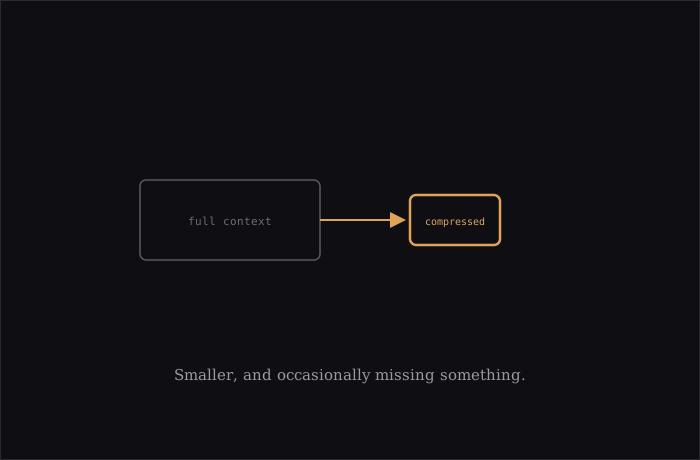
Right alongside Caveman this week sits Headroom, GitHub’s Trendshift #1 repository of the day — solving the same token problem with a genuinely different philosophy: it’s the “proxy” half of the pattern I laid out separately, built out as serious, dedicated infrastructure rather than a lightweight add-on.
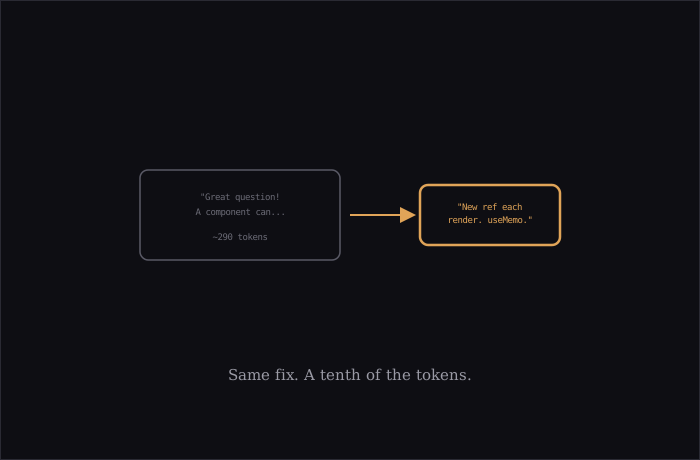
What it actually compresses, and by how much: everything an agent reads before it reaches the model — tool outputs, logs, RAG results, files, conversation history. The published numbers are specific rather than a single rounded claim: roughly 20% fewer tokens for typical coding-agent sessions, 60 to 95% fewer for structured JSON specifically, and separately reported task-level results like a GitHub issue-triage benchmark going from 54,174 tokens to 14,761 — a 73% cut on that specific workload.
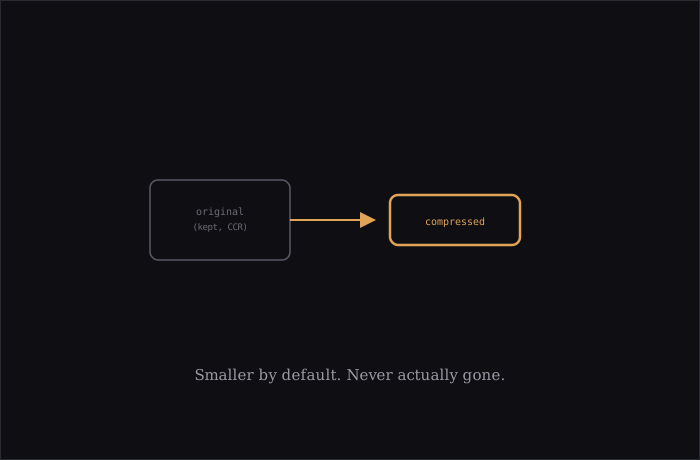
The mechanism that separates this from a simple truncate-and-hope compressor: CCR, Headroom’s own name for reversible compression. Content gets compressed going in, but the original is retained and retrievable — the model can pull back the full, uncompressed version on demand if whatever it’s working on genuinely needs detail that got smoothed over. That’s a direct, structural answer to the exact risk I flagged generally about any compression scheme — that the discarded detail turns out to matter later. Headroom’s answer isn’t “trust the compression,” it’s “compress by default, but never actually lose the source.”
Compression decisions are made by an actual small model, not just pattern-matched rules. Headroom ships its own purpose-built model, Kompress-v2-base, specifically to decide what’s safe to compress and how — a genuinely different architecture than a static rule file, closer to a small specialized classifier making per-piece calls than a fixed set of regex-style trims. It also compresses in both directions where relevant: input compression for what the agent reads, and a separate output-token-reduction mode for what the model itself writes back, tracked on its own dashboard tile.
Where it actually plugs in: as a Python or TypeScript library you import directly, as a standalone local proxy you route traffic through, or as an MCP server — three different integration points for three different ways people already build agent tooling. It wraps existing coding agents directly with commands like headroom wrap claude or headroom wrap copilot, including routing GitHub Copilot CLI’s own subscription traffic through the same local compression pipeline before it reaches Copilot’s hosted API. A feature worth flagging on its own: headroom learn mines your own past failed agent sessions and writes corrections directly into your project’s CLAUDE.md or AGENTS.md — not compression at all, but a genuinely separate feedback loop bundled into the same tool.
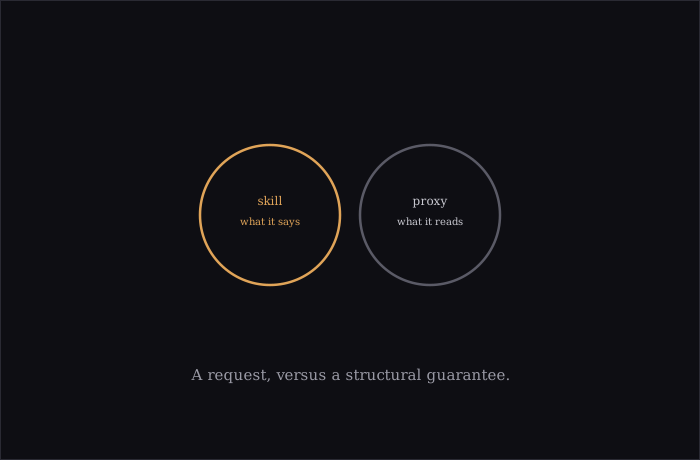
How this actually compares to Caveman, now that both exist for the same underlying problem: Caveman leads with the skill — a simple, instantly toggleable grammar change anyone can install in thirty seconds — and treats the proxy as the optional second layer for people who want more. Headroom skips the grammar trick entirely and leads with serious, benchmarked infrastructure: a dedicated model, a reversibility guarantee, multiple integration surfaces, and a dashboard tracking exactly what got saved. Neither approach is strictly better — one optimizes for “install this in one command and feel the difference immediately,” the other for “give me infrastructure I can actually trust with real reversibility guarantees and hard numbers behind every claim.” Which one fits depends entirely on whether you want a quick win or a piece of real infrastructure sitting permanently in your agent’s request path.