I wrote about token compression as a general concept a week ago — summarizing, deduplicating, trimming what an agent resends. Caveman, trending hard this week past 108,000 stars, is a specific, oddly named implementation of exactly that idea, and it’s a good concrete case study now that I’ve got a real example to point at.
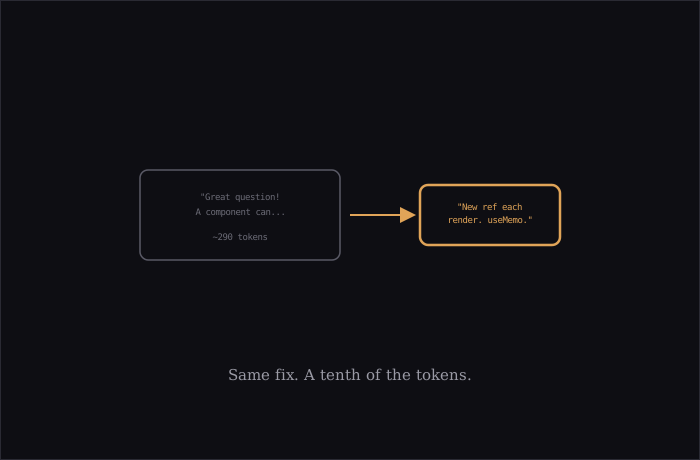
The trick is genuinely simple to state: strip articles, filler, hedging, and pleasantries from what the model says back to you, while explicitly preserving every technical detail — code, error strings, symbols, exact commands. The project’s own before-and-after is the cleanest illustration: a normal agent’s explanation of a React re-render bug runs about 290 tokens of “Great question! A React component can re-render on every keystroke for several reasons…” Caveman’s version of the identical fix runs 31 tokens: “New object ref each render. Inline prop = new ref = re-render. Wrap in useMemo.” Same fix. Roughly a tenth of the tokens.
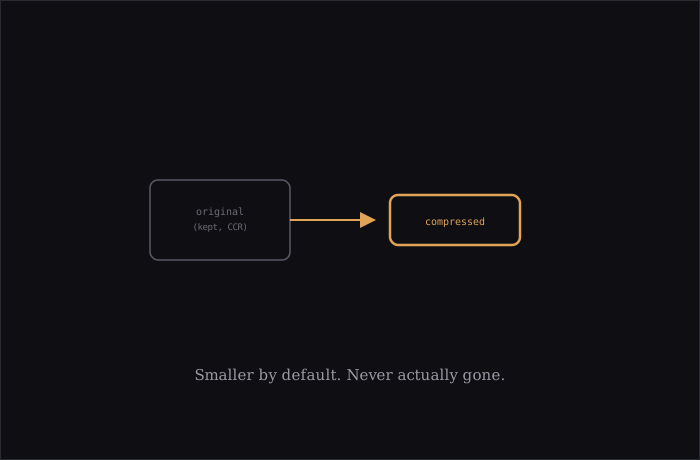
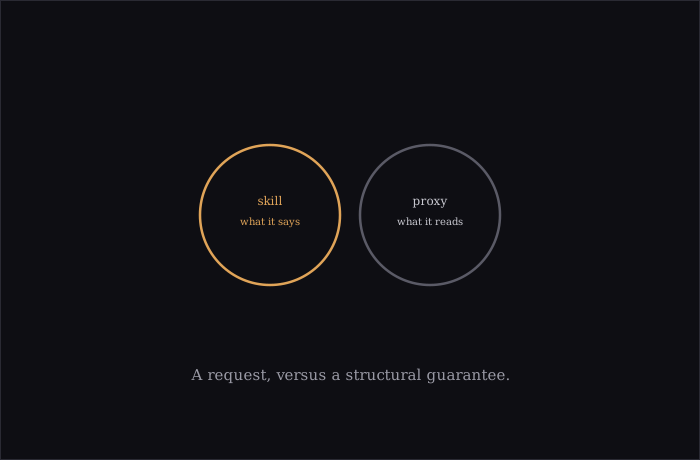
It actually ships as two separate layers, which is worth understanding as two different tools rather than one feature: the “skill” is a rule file that changes how the agent talks — free, MIT licensed, installable into more than 30 agents including Claude Code, Codex, Gemini CLI, Cursor, and Cline with one command, and it only affects the model’s own output. The “proxy” is a separate piece that runs locally between your agent and whatever provider it’s calling, and it compresses the other direction — logs, test output, JSON, diffs, search results — before the agent ever reads them, with every compressed byte backed up so the original can be pulled back if something downstream actually needs the full version.
The part that keeps this from being just a fun gimmick: the project publishes an actual reproducible benchmark rather than a marketing claim — 1.93x fewer tokens than Codex CLI on identical tasks, same underlying model, same reasoning effort, comparable pass rate, with raw CSV output, per-task logs, and a one-command reproduction script published alongside the result. That’s a meaningfully higher bar than most efficiency claims in this space clear, and it’s worth noting the project’s own skill documentation is honest about where that confidence stops: “result depends on model and workload; no aggregate reduction or quality-equivalence claim is published” for the general case beyond that specific benchmark.
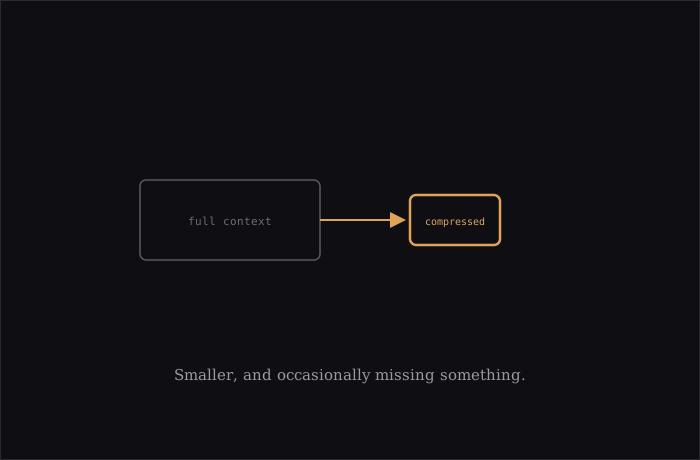
Where this connects to the tradeoffs I already flagged: everything I said about compression being a bet on what’s safe to discard applies here directly — dropping filler is close to zero-risk, but the “ultra” intensity setting drops articles and sentence structure much more aggressively, and there’s a real, if narrower, chance that stripping structure this hard occasionally costs clarity on a genuinely ambiguous case. The project’s own answer to that risk is sensible: multiple intensity levels (lite, full, ultra), an instant off-switch (“stop caveman,” back to normal prose immediately), and — on the proxy side specifically — nothing is ever lost outright, since every compressed piece of tool output keeps a full, retrievable backup.
The ecosystem around it has already gone through one consolidation worth knowing if you search around and find older references: a standalone terminal agent called Caveman Code and a separate persistent-memory tool called cavemem both preceded the current project and are now frozen, with their actual working parts — the compression grammar, the memory core — folded into the single caveman skill-and-proxy combination that’s live today. If you’re picking this up now, that’s the version to actually install.