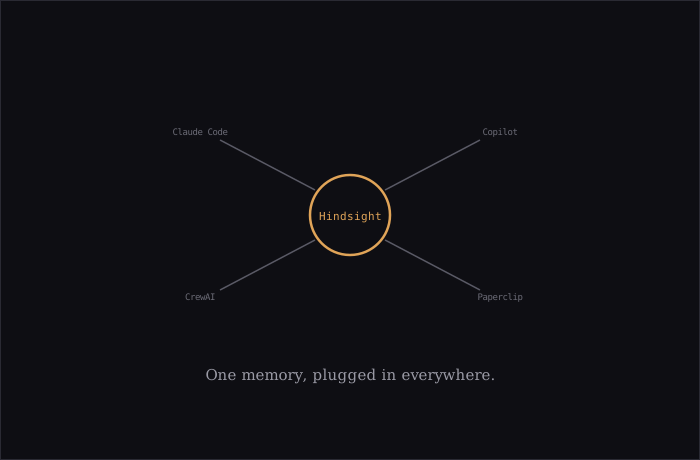
I’ve covered memory for coding agents a few times now — claude-mem’s session compression, the general portability problem between vendors. Hindsight is trending hard this week, and it’s aimed squarely at that portability gap: one memory service, meant to plug into everything, instead of every tool building its own closed memory layer.
What it actually stores, and how: facts about the world, entities and the relationships between them, and — the more specific claim — temporal reasoning, so it can actually answer something like “what happened last spring?” rather than just returning whatever text looks similar to the question. It distinguishes three kinds of memory specifically: world facts, experience facts (things the agent itself did), and observations, and it can form opinions based on configurable “disposition traits” you set for how the memory layer should weigh and prioritize what it’s tracking.
Why the integration list is the actual headline here, more than any single feature: at last count, shipped integrations include Claude Code, VS Code Copilot’s agent mode, Windsurf, Roo Code, the OpenAI Agents SDK, Grok Build, CrewAI, Pydantic AI, the Vercel AI SDK, LlamaIndex, Haystack, and — as I covered in a companion post today — a dedicated Paperclip plugin that gives every agent in a Paperclip company persistent memory with no code changes at all. That’s a genuinely wide spread across tools that otherwise share nothing — different languages, different vendors, different philosophies about what an agent even is — all able to read from and write to the same memory store.
The technical shape: self-hostable via Docker with an embedded database, or usable as a hosted cloud service; an MCP server for direct integration with any MCP-compatible client; and five core tools exposed to agents — retain, recall, reflect, getMentalModel, and getDocument — with infrastructure concerns like budget and tagging configured once at setup, while what to actually remember stays a decision the model itself makes at the semantic level. Backing and sponsorship include Anthropic, Meta, Microsoft, NVIDIA, and Bloomberg, which is a notably broad and serious set of names for a project still this early in its public life.
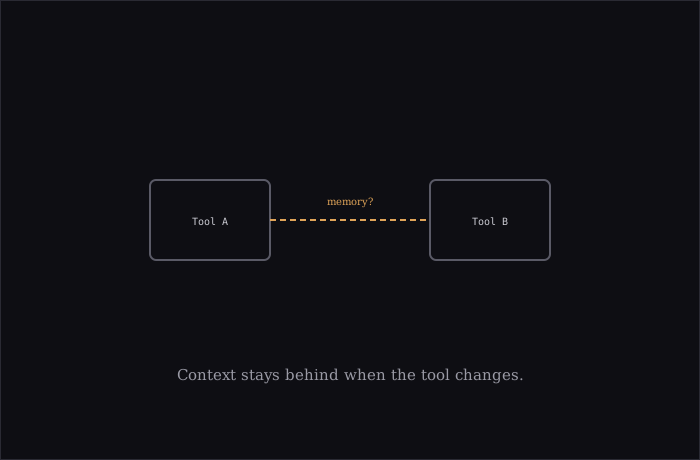
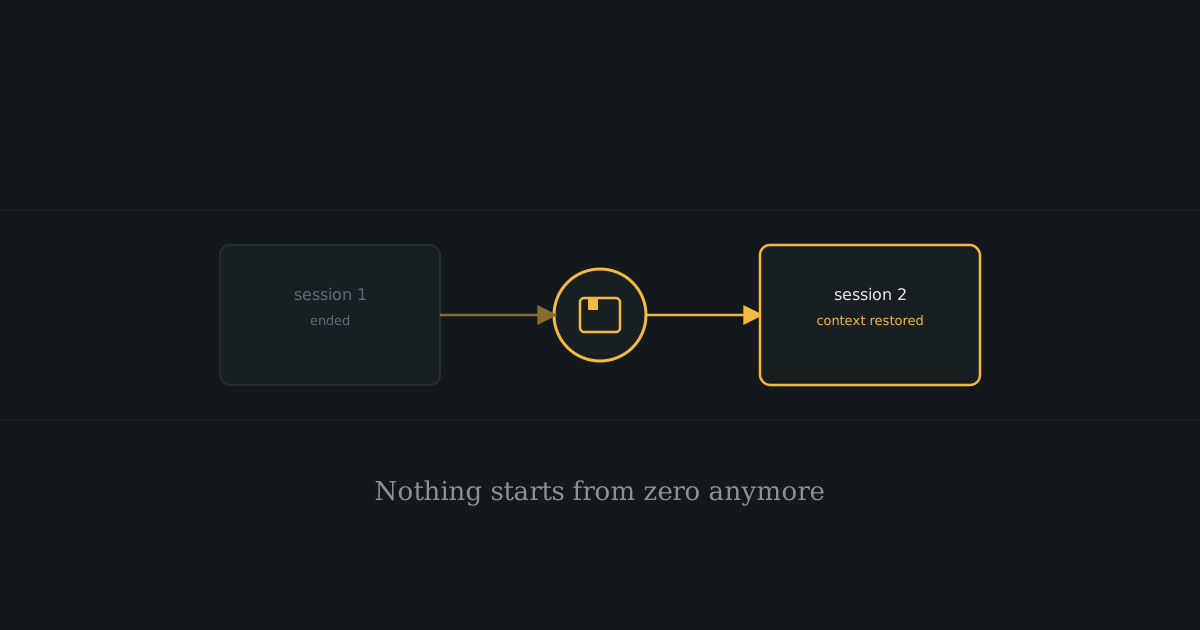
Why this is a more direct attempt at the portability problem than anything I’ve covered so far: claude-mem is explicitly scoped to one tool, and the portability gap I wrote about separately was framed as something no shared standard had actually solved yet. Hindsight’s bet is that the standard doesn’t need to be a new protocol everyone agrees to — it can just be one memory service with enough individual integrations shipped that switching agents doesn’t mean losing your accumulated context, because the memory was never tied to the agent in the first place.
The genuine open question, the same one that applies to any single project trying to become shared infrastructure: this working depends on Hindsight staying maintained and staying neutral across all the ecosystems plugged into it. A memory layer that goes stale, or that starts favoring one vendor’s tools over another’s, recreates exactly the lock-in problem it’s trying to solve — just one level up, with your memory now tied to Hindsight instead of to whichever agent you started with.