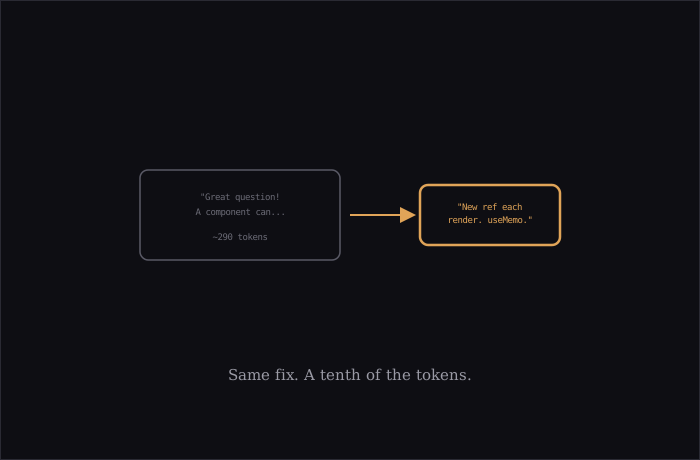
I’ve spent the last two days on Caveman and Headroom, both compressing an agent’s tokens from the outside — a skill changing what it says, a proxy changing what it reads. Ember-1, trending on Hacker News since its September 23 research-preview release, is a genuinely different approach to the same underlying cost problem: change how the model itself reasons, before any of that content exists to compress.
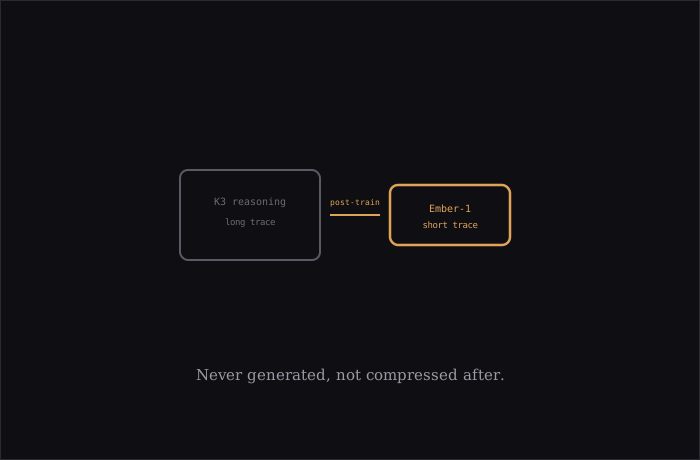
The actual problem Fireworks is targeting is specific: reasoning models like the Kimi K3 base Ember-1 is built from can spend more than 90% of their generated tokens on internal reasoning rather than the final answer — and in a multi-turn agentic session, every one of those reasoning traces gets replayed back to the model on the next turn, compounding the cost across the whole conversation. The obvious fix, just turning down K3’s reasoning-effort setting, made results measurably worse. Fireworks’ actual approach was more careful: post-train the model specifically to reason more economically, while deliberately preserving the parts of its reasoning that let it recover from a mistake or adapt when feedback contradicts its first attempt.
What that process actually looked like: more than 50 distinct training experiments and over 200 evaluation cycles, spanning mathematics, coding, search, tool use, and general software engineering tasks, to find a training signal that shortened reasoning without quietly discarding the specific reasoning patterns that make K3 good at course-correcting mid-task.
The results, reported directly rather than rounded to one headline number: 35 to 50% fewer tokens across seven published benchmarks at comparable accuracy, and — the number that’s actually pulling Hacker News attention — up to $68 saved per resolved task on SWE-bench Verified compared to full-reasoning Kimi K3. On Terminal Bench 2.1 specifically, Ember-1 scored 82.0% against K3 Max’s 80.9%, using 51.9% fewer tokens and $23.10 less per task, meaning it didn’t just get cheaper, it edged out the more expensive baseline it’s compared against on that particular benchmark. Fireworks also reports real production numbers, not just benchmark results: roughly 35% fewer tokens per task at comparable quality in live A/B tests across two customers’ actual coding workloads.
The specific, honest caveat worth naming, since I’ve flagged this pattern with other benchmark claims this month: these are Fireworks-reported figures from Fireworks’ own evaluation, not yet independently reproduced by a third party — a real result, backed by more actual methodology detail than most efficiency claims in this space bother to publish, but still one company’s own numbers on its own model until someone else runs the same benchmarks independently.
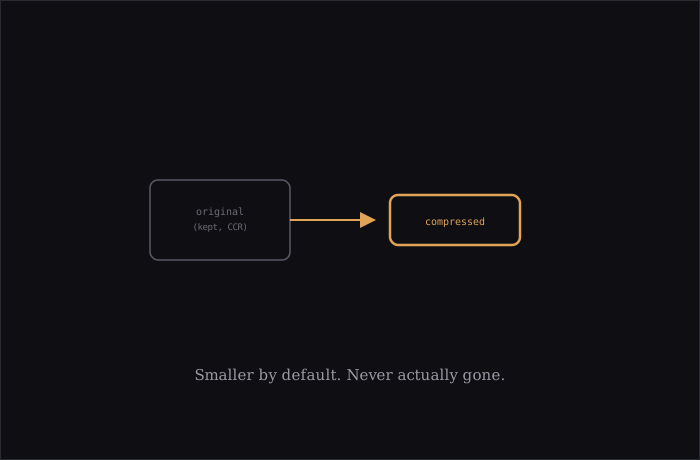
Why this is a meaningfully different lever than what I covered the last two days, not just a third flavor of the same trick: Caveman and Headroom both operate on content that already exists — a reply the model already generated, a tool output that already arrived — and compress it before it counts against the next call’s cost. Ember-1 changes what gets generated in the first place, at the reasoning-trace level, before there’s anything downstream to compress at all. Deployed together — a model trained to reason efficiently, wrapped in a proxy that also compresses whatever tool output it reads, running through a skill that also keeps its final replies terse — you’re addressing three genuinely separate stages of the same cost problem rather than three variations on one fix, which is closer to how the actual cost of a long agentic session is structured in the first place: reasoning tokens, output tokens, and input tokens, three different sinks that don’t shrink the same way or respond to the same trick.