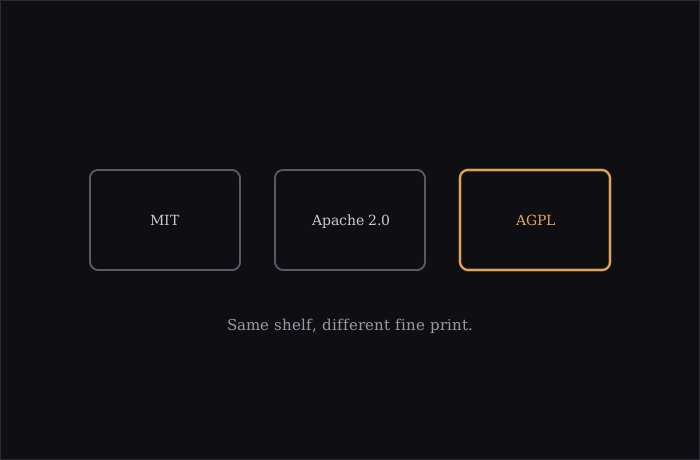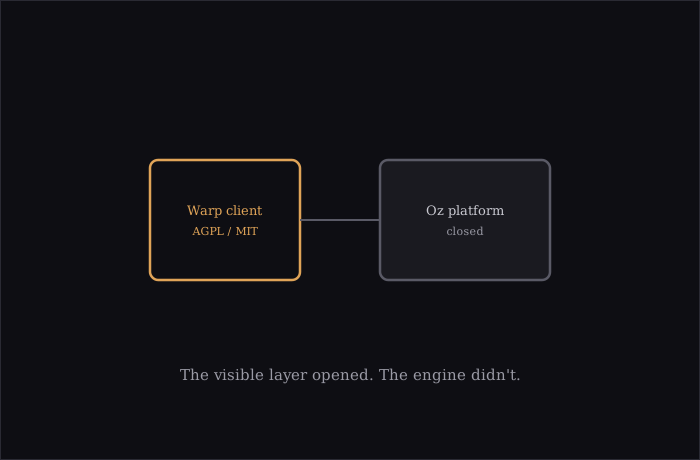
In late April 2026, Warp — the Rust-based, AI-first terminal — put its client codebase on GitHub after years of teasing it. The split is genuinely open: the UI framework crates are MIT, everything else in the terminal client is AGPL-3.0, which means anyone offering a modified version as a network service has to release those changes too. That’s a real, meaningful license, not a symbolic gesture. It picked up tens of thousands of stars within days, climbed GitHub’s trending page, and OpenAI signed on as founding sponsor of the repo.
Here’s the part that got a lot less headline space: Oz, Warp’s cloud agent orchestration platform — the thing that actually runs the multi-agent workflows Warp’s “agentic development environment” pitch is built around — stayed fully proprietary. You can read, audit, and fork the terminal you type into. The layer that triages issues, drafts specs, implements changes, and reviews pull requests still runs entirely on Warp’s own infrastructure, closed. Some developers also flagged that Warp’s own contribution workflow routes through Oz — meaning even contributing to the “open” client leans on a proprietary system underneath.
The community reaction split in a familiar way: real enthusiasm that a long-promised open-sourcing actually happened, alongside a Hacker News debate over whether “open source” was doing more marketing work than technical work here. One direct response: a fork called OpenWarp appeared specifically to strip out the restrictions on which model backends you can point the client at, since Warp’s own BYOK model freedom was locked behind paid plans even after the source opened up.
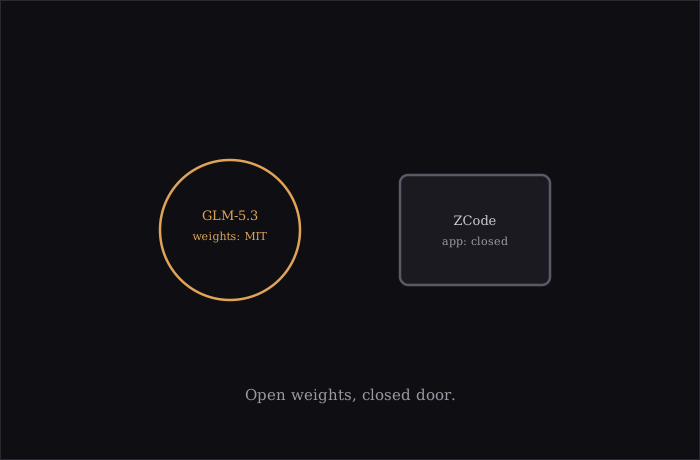
I’ve now written three of these in about as many weeks — MiniMax’s “modified MIT” that wasn’t, ZCode getting called open source because its model’s weights are, and now Warp opening the visible layer while keeping the layer that actually does the agentic work closed. I don’t think this is coincidence anymore so much as a genuine pattern: as “open source” becomes something companies want credit for, the thing that actually gets opened is increasingly just whichever layer is cheapest to give away, while the layer that creates real lock-in or captures the recurring revenue stays closed. None of these companies are lying, exactly — the license text is usually accurate if you read it. It’s just that “open source” as a headline keeps describing less of the actual product than it used to.