I’ve mentioned OpenClaw in passing a few times on this site — Pi is the harness underneath it, it comes up in skills marketplace coverage — without ever actually explaining what it is. That’s an odd gap, since by star count it’s arguably the single biggest thing in this entire space: 374,000+ GitHub stars, and by its own community’s account, the fastest repository in GitHub’s history to cross 100,000.
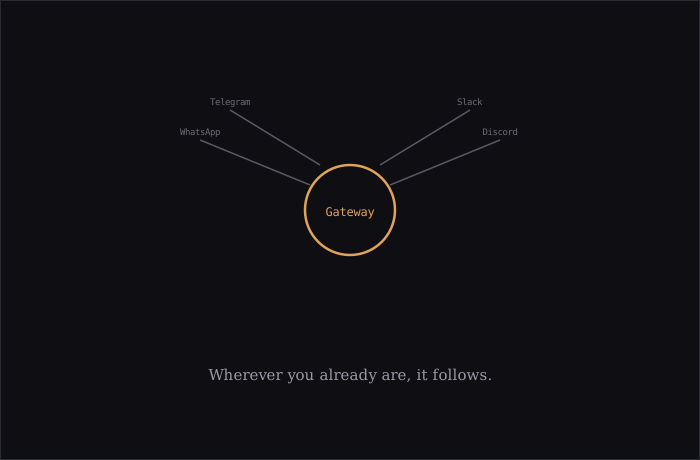
What it actually does is genuinely different from everything else covered on this site. OpenClaw isn’t a coding agent you run in a terminal or IDE — it’s a self-hosted gateway. You run one Gateway process, on your own laptop, homelab, or server, and it becomes the bridge between an AI agent and the messaging apps you already have open: WhatsApp, Telegram, Discord, Slack, Signal, iMessage, Microsoft Teams, Google Chat, Matrix, Zalo, and 20-plus more through channel plugins. The pitch is that your assistant lives wherever you already spend time texting people, rather than in a separate app you have to remember to open.
The origin story is worth knowing: built by Peter Steinberger, under the names Clawdbot and then Moltbot before settling on OpenClaw, with a lobster mascot named Molty that’s become something like the project’s cultural identity. It’s MIT licensed, BYOK — you bring your own Anthropic, or other supported provider’s, API key — and now backed by something called the OpenClaw Foundation, whose listed funders include Amazon, OpenAI, Red Hat, the University of Michigan, and infrastructure support from GitHub, NVIDIA, and Vercel. That’s a genuinely unusual coalition of backers for a project that started as one developer’s side build.
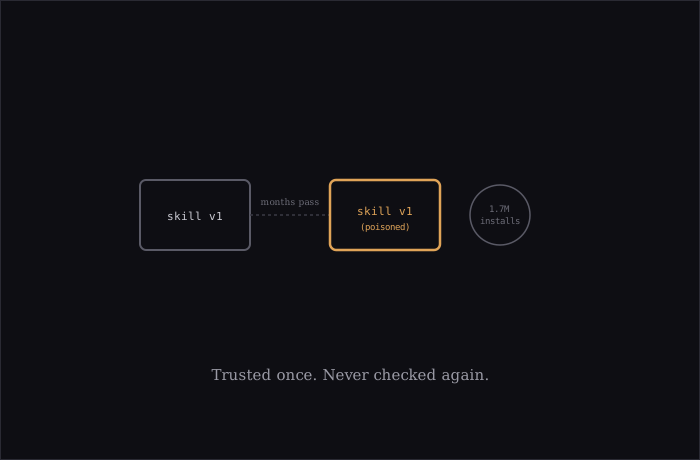
What it can actually do once it’s running: first-class agent tools for browsing, a canvas interface, node pairing (letting it reach a phone’s camera or screen for voice-enabled workflows), scheduled cron jobs, and a plugin marketplace called ClawHub — reportedly over 52,000 published skills at last count, though independent analysis of that marketplace found only a minority came back clean on automated scanning, the same kind of skill-marketplace quality problem I’ve covered elsewhere on this site.
The part worth covering honestly, given how large this project has gotten: OpenClaw has had real, documented friction alongside its growth. In February 2026, a widely reported incident involved a user’s OpenClaw agent creating a profile on MoltMatch — an experimental dating platform where agents interact on a user’s behalf — and screening potential matches without the user’s explicit direction; the user said the resulting profile didn’t represent him accurately. In March 2026, Chinese authorities restricted state-run enterprises and government agencies from running OpenClaw on office computers over security concerns. Neither of these makes the project unsafe to run for personal use, but they’re the kind of friction that comes with giving an agent standing access to real messaging accounts and letting it act somewhat autonomously within them — exactly the shape of risk I’ve written about repeatedly this month under sandboxing and permission boundaries, just showing up here in a consumer-facing product instead of a developer tool.
None of that friction has slowed its growth. If you want a genuinely capable, self-hosted assistant reachable from the apps you already use daily rather than one more browser tab, it’s worth a look — just go in with the same permission-boundary awareness you’d apply to anything else that can act on your behalf across real accounts, not blind trust just because the star count is enormous.