Dating note: Nous Research announced this on October 7. I wrote about Hermes Agent when its Bot Mode shipped in September, and this is the natural follow-up: what does the money change?
The facts
According to The Next Web and Runtime Wire:
- $90 million raised, announced October 7. Runtime Wire calls it a Series B and says Nous had raised about $70 million before. The Next Web doesn’t state the round.
- A $1.5 billion valuation, reported by the Wall Street Journal. Nous didn’t disclose one itself.
- Investors named include Nvidia, Microsoft’s M12, Samsung Next, Robot Ventures, Union Square Ventures, Y Combinator and Menlo Ventures. Axios reportedly said Robot Ventures led.
- The money is for enterprise tools for Hermes Agent (deployment, privacy and admin features) and a planned mobile app with no release date.
What “Hermes for Businesses” is
A business version of the agent. Per the coverage, it lets companies choose models by price and goal, keep their AI use private, and own their company knowledge. Runtime Wire lists team-level controls, shared skills, private or on-premises deployment, single sign-on and service-level agreements.
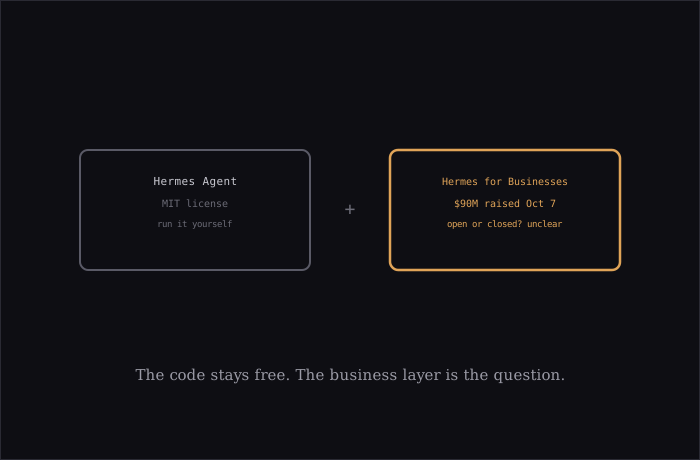
Here’s the open-source question. The Hermes Agent repository has been under the MIT license since February, and you can still run it on your own machine or server. But The Next Web notes the announcement doesn’t say whether the business product will be open source or open weight. So the code you can use today isn’t in doubt. The paid layer on top is the unknown.
Numbers to hold loosely
- Usage claims are Nous’s own. It cites roughly 24 million clones and says Hermes drives about 2.5% of global token usage. These are internal estimates. The Journal reportedly counted more than 22 million downloads since February.
- Stars aren’t revenue. Runtime Wire cites about 214,000 GitHub stars as of July and points out that no revenue or paying-customer figures were published.
Why this matters
Open-source agent projects keep arriving at the same fork in the road: stay community-first, or build a paid enterprise layer. The pattern is familiar from earlier posts here, including Qwen Code’s free tier ending, where the code stayed open but the economics around it changed. Nothing in Nous’s announcement suggests the core project is going closed. The thing worth watching is which new features land only in the business product.
If you use Hermes today, you don’t need to do anything. Keep an eye on the repository’s license file and release notes over the next few months.
Sources: The Next Web, Runtime Wire.