Dating note: this launched Wednesday, October 7. I’m writing a few days late, and I stuck to OpenAI’s own post so I’d only report what the company actually said.
What OpenAI says it shipped
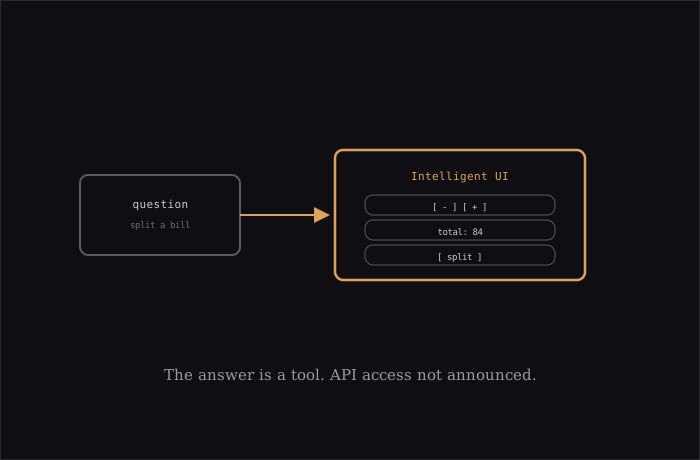
Intelligent UI. ChatGPT can now answer with tappable buttons, forms, charts and small interactive tools, such as a bill splitter, a savings calculator or a simple game. The layout adapts to the question. OpenAI’s stated aim is letting software “combine UI, data, and actions” in ways fixed interfaces can’t.
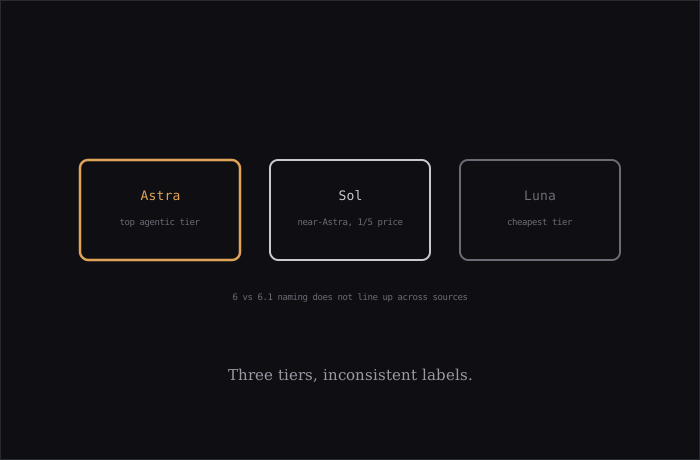
Two everyday models.
- GPT-6 Sol for Plus, Pro, Business and Enterprise
- GPT-6 Luna for Free and Go
Both are tuned for everyday conversation.
Speed. ChatGPT can start answering while it’s still reasoning. For web-search questions, OpenAI says GPT-6 Instant starts answering 44% sooner on average than GPT-5.6 Instant. That is OpenAI’s internal measurement, not an outside test.
Rollout. It began October 7 for the paid tiers in the Chat tab, with Enterprise depending on admin settings. Free and Go users got it the following day. OpenAI also reports stronger resistance to attempts to bypass safety training, with details in a system card I haven’t read.
What the post doesn’t say
This is the part that matters for people who build things:
- No pricing.
- No API availability.
- No coding or agent details, beyond one line saying the models behind Work and Codex are unchanged.
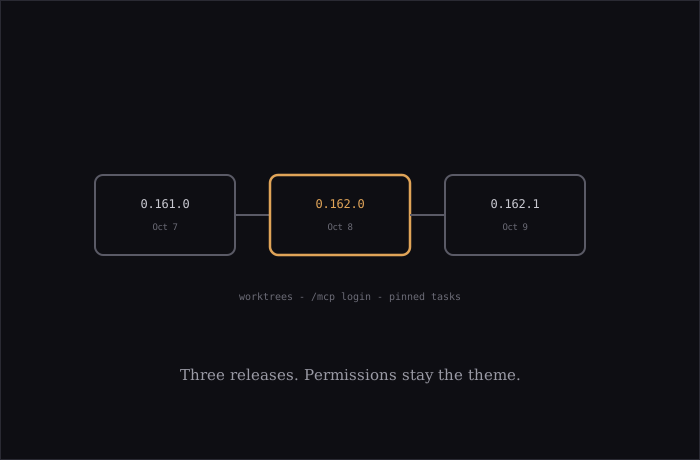
So if you saw a claim about GPT-6 inside a coding agent or the API, it didn’t come from this announcement. One thing I noticed and can’t reconcile: Codex CLI’s release notes from the same day mention a model named “GPT-6.1 Sol” as a new default in its catalogs, which doesn’t line up neatly with “Codex models unchanged.” I wrote up those release notes in the Codex CLI post and left the naming question open.
My read
The interesting idea here is interface-as-answer: instead of paragraphs of text about splitting a bill, you get a working splitter. If OpenAI later exposes that to developers, it could change how apps are built around a model. Today it’s a ChatGPT feature, and nothing in the post says it’s more than that.
For this blog’s usual topic, open-source coding agents, the practical effect is small for now. The one thing to watch is whether this “model generates the UI” pattern shows up in the API or in Codex.
Source: OpenAI, “GPT-6 for everyone”.