Dating note: Mistral opened the preview on October 6. This is a roundup of what’s confirmed and what’s still a promise, drawn from Let’s Data Science and Online Tech Tips. I haven’t tried the model, and most of the specs below are Mistral’s own.
What’s available now
Large 4 is in public preview, reachable through Mistral Studio and the Mistral API only. There are no downloadable weights yet.
According to Mistral’s documentation as relayed by these write-ups:
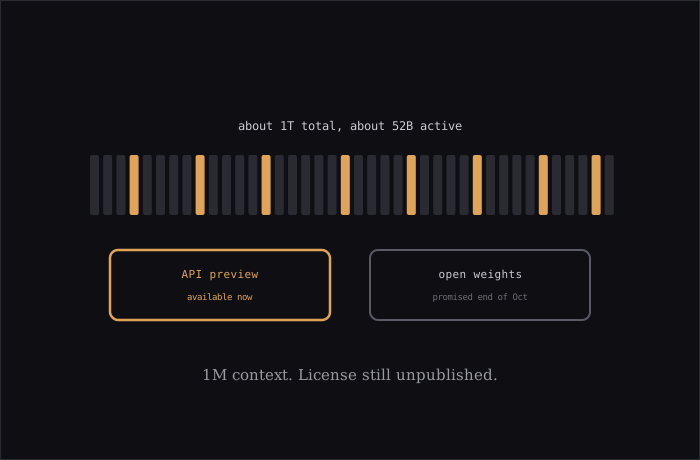
- Architecture: mixture-of-experts, about 1 trillion parameters in total.
- Active parameters: roughly 52 billion per response. Some early coverage said 49 billion, and the sources don’t settle which is right.
- Context window: 1 million tokens.
- Modalities: text and images, with support for 160+ languages claimed.
- Reasoning: it can switch between fast replies and slower step-by-step reasoning.
- API features: function calling, structured outputs and document question answering.
- Launch pricing: half the regular rate, at $0.68 per million input tokens and $2.09 per million output tokens.
The “open” part is a promise
Mistral says downloadable weights will follow “by the end of the month,” after more safety work. Online Tech Tips attributes the specific date of October 27 to The New Stack, not to Mistral, so I’d treat it as a report. The license hasn’t been published, and Online Tech Tips says it reportedly won’t be Apache 2.0, which Large 3 used. Both are open questions that decide whether “open weight” means “you can build a business on it.”
Mistral is also continuing red-team testing with selected cybersecurity partners and public-sector organizations, and it calls the launch staged, not a full unrestricted release.
Can you run it?
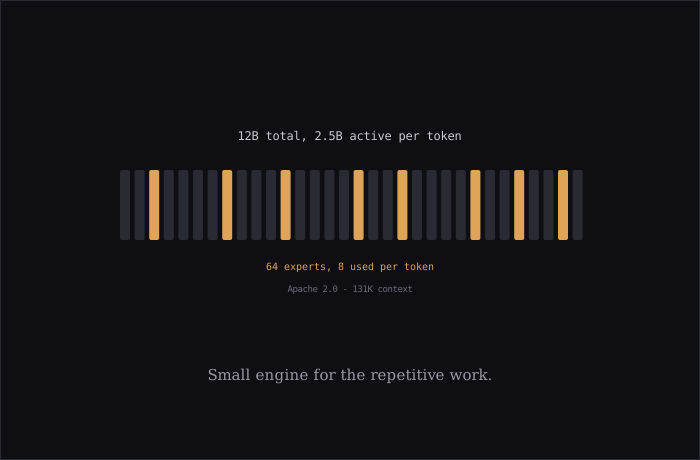
Probably not at home. Online Tech Tips estimates the full model needs about 500 GB of memory even at 4-bit. That makes it a data-center model for companies who want self-hosting or European data residency. If a small open model for local use is what you’re after, my Mellum 2.1 post covers one that fits on far more modest hardware.
How good is it?
Be careful here. Most results are Mistral’s and unverified. The Online Tech Tips piece reports:
- In Mistral’s own blind coding test, Large 4 scored 3.74 out of 5, behind Claude Opus 5 at 4.22.
- Its DeepSWE score of 61.7% trails leaderboard scores of about 74% for rivals.
So the honest summary is “competitive, not clearly ahead,” and independent evaluations haven’t landed. Early reactions on social media are reportedly positive and focused on Europe, with some users pointing out that “open” doesn’t apply until the weights ship.
What I’d watch
- Does the weight release actually happen by the end of October?
- What is the license?
- What do independent coding-agent benchmarks say once outsiders can run it?
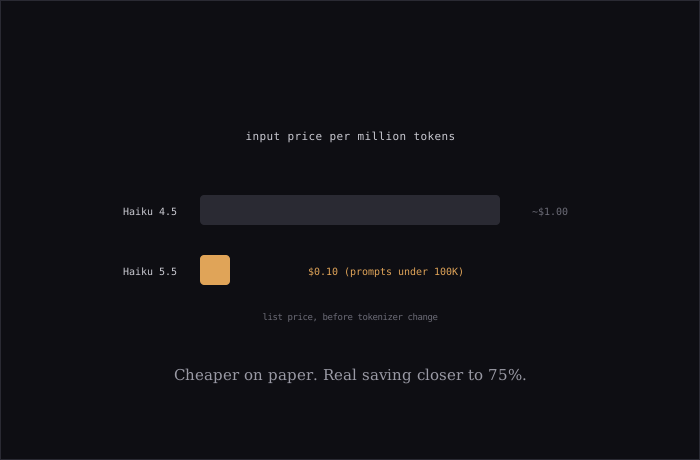
For developers using agents, the price matters too. Half-price launch rates are a promotion, not a plan. I’d compare against cheaper options like the one in my Claude Haiku 5.5 post before building on it.
Sources: Let’s Data Science, Online Tech Tips.