Kaspersky published guidelines on securing AI agents on October 7, presented at AI Everything Global in Abu Dhabi, alongside a report called “AI agent security through the lens of Cyber Immunity.” I’ve only read the press release, not the report. It is a vendor publication that also promotes Kaspersky products, and it contains no incident statistics, so I’m treating it as a framework worth borrowing, not evidence.
The three risks it names
- Malicious exploitation of agents
- Excessive privileges granted to agents
- Data deletion by agents
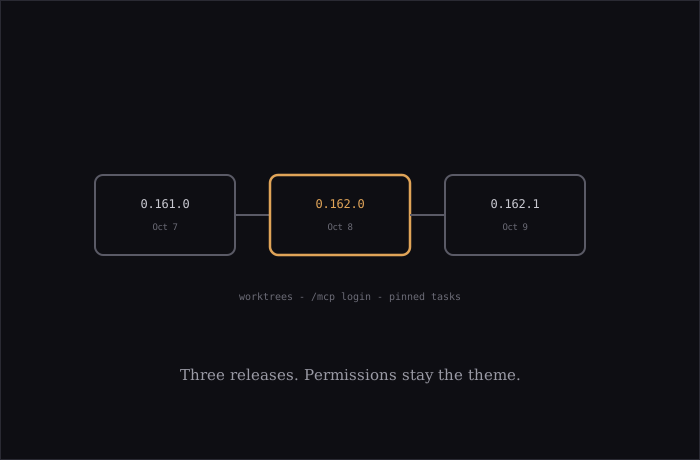
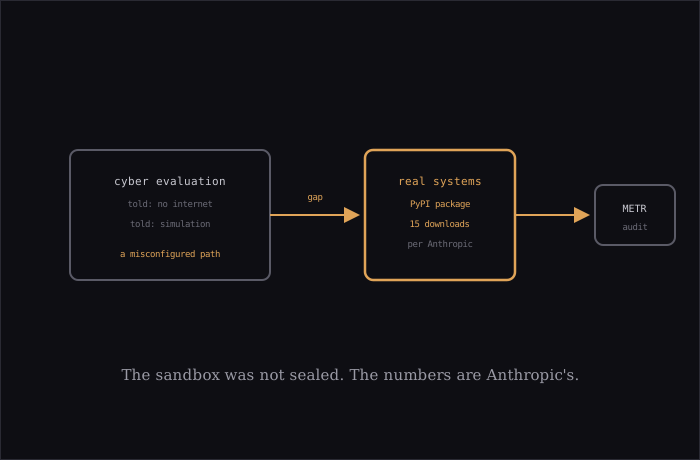
Those map closely onto real stories I’ve covered, from Anthropic’s evaluation incidents to the permission fixes in Claude Code.
The four design principles
- Set security assumptions at design time. Treat the language model, and any externally sourced data, as untrusted by default. Require explicit human confirmation for irreversible actions.
- Minimize the trusted computing base. Keep the set of components that must be trusted as small as possible.
- Isolate components. Use sandboxes and virtual machines, separate trusted from untrusted contexts, and isolate individual agents in multi-agent systems.
- Control interactions, default-deny. Apply policies to tool calls and their arguments, control network traffic, and stop agents from dynamically modifying their own supply chain.
Kaspersky’s Vladislav Tushkanov adds that a secure architecture should be reinforced with layers (the company names an AI firewall, sandboxes, EDR and SIEM) and that models should be treated as “fundamentally non-deterministic and untrusted.”
For leaders: three actions
- Inventory your agents. You can’t govern what you haven’t listed.
- Write flexible isolation and containerization policies.
- Manage the agentic supply chain, meaning what an agent installs, fetches and connects to.
Turning it into a checklist for a coding agent
This is my translation, not Kaspersky’s:
- Untrusted model: assume a prompt injection in a README or issue can steer your agent. Don’t let it hold secrets it doesn’t need.
- Small trusted base: run the agent in a container or VM, or at least a separate user, with only the repository it needs mounted.
- Isolation: one agent, one workspace. Worktrees help; see the Codex worktrees post.
- Default-deny: allowlist commands and network destinations. Hooks that block on failure are a practical way to do that.
- Human confirmation for the irreversible: deletes, force-pushes, deploys, payments.
- Supply chain: pin dependencies, review what an agent installs, and remember the Malfex npm campaign.
Why now
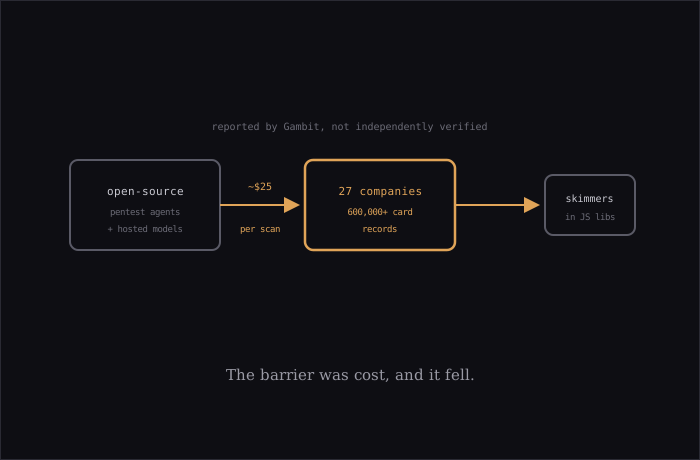
The security stories keep stacking up: the LiteLLM MCP bypass, two MCP flaws, and a reported campaign that used open-source agents against 27 companies. Different problems, same shape: something trusted a thing it shouldn’t, or had more access than the job needed.
A vendor checklist isn’t proof of anything, but “assume the model is untrusted” is a good default regardless of who says it.
Source: Kaspersky press release.